Code review with evidence and one history
Engineering teams get a review of every change, with the evidence and the fix attached. The same review runs from the terminal, the editor, the API and an unattended service, so a review means the same thing wherever it starts.
- IndustryDeveloper tooling
- EngagementKoca Ventures product, developed and owned in house
- StatusIn active use, under continued development
One engine behind every way of requesting a review
Engineering teams receive security, performance and quality findings on a proposed change, each with a suggested fix, as one ordered queue worked from the top.
The same engine runs whether the request comes from a terminal command, an editor, the API, or a background service watching a repository on a schedule. All four share one history, so a review started at the keyboard is the review the dashboard shows later, and a pull request keeps a single comment that is updated in place. Koca Ventures developed and owns the platform. It runs with locally hosted models on an organisation's own hardware as well as with external providers, so a customer can adopt it without building a custom review system and without fine-tuning reviewer models of its own.
Automated review that engineers stop reading
Engineering organisations adopting automated review meet three failures. The platform was designed against each of them.
Noise that costs more than it catches
A tool that flags formatting churn, reordered imports and unverified guesses teaches a team to skim its output. Once review output is skimmed, the one finding that mattered is skimmed with it.
Findings without fixes become tickets
A review comment that describes a problem and stops hands the work back to an engineer who was already busy. The corrected code still has to be worked out, and the finding is often deferred.
Inconsistent behaviour across surfaces
Review in the terminal, in the editor, on a pull request and on a schedule were separate tools with separate behaviour and separate history. The same change could pass one and fail another.
What the platform does
One review wherever it is asked for, with the evidence an engineer needs to judge each finding.
The same review, wherever the team works
A team reviews from the terminal, the editor, the API or a scheduled service and gets the same result with the same history. A review started at the keyboard is the review the dashboard shows later.
- A terminal command, an editor integration, an API with live updates and a background service all run the same review
- One shared history, so a review started at the keyboard is the review the dashboard shows later
- Runs with locally hosted models on the customer's own hardware or with external providers, chosen in configuration
Findings that come with the fix
Each finding carries a severity and one of three actions, fix now, fix soon or review later, so a team works the report from the top. The corrected code is attached, so a finding is work done instead of a ticket raised.
- Every finding carries replacement code
- Every finding points at a real path in the repository
- A finding remains identifiable across formatting changes
Findings an engineer can judge
Findings arrive with supporting evidence and their review status, so engineers can see what was confirmed and what the platform could not confirm.
- Trivial changes produce no review noise
- Each finding carries its evidence and its review status
- A finding that could not be confirmed stays in the report and is never dropped silently
Weaknesses found and patched before an attacker finds them
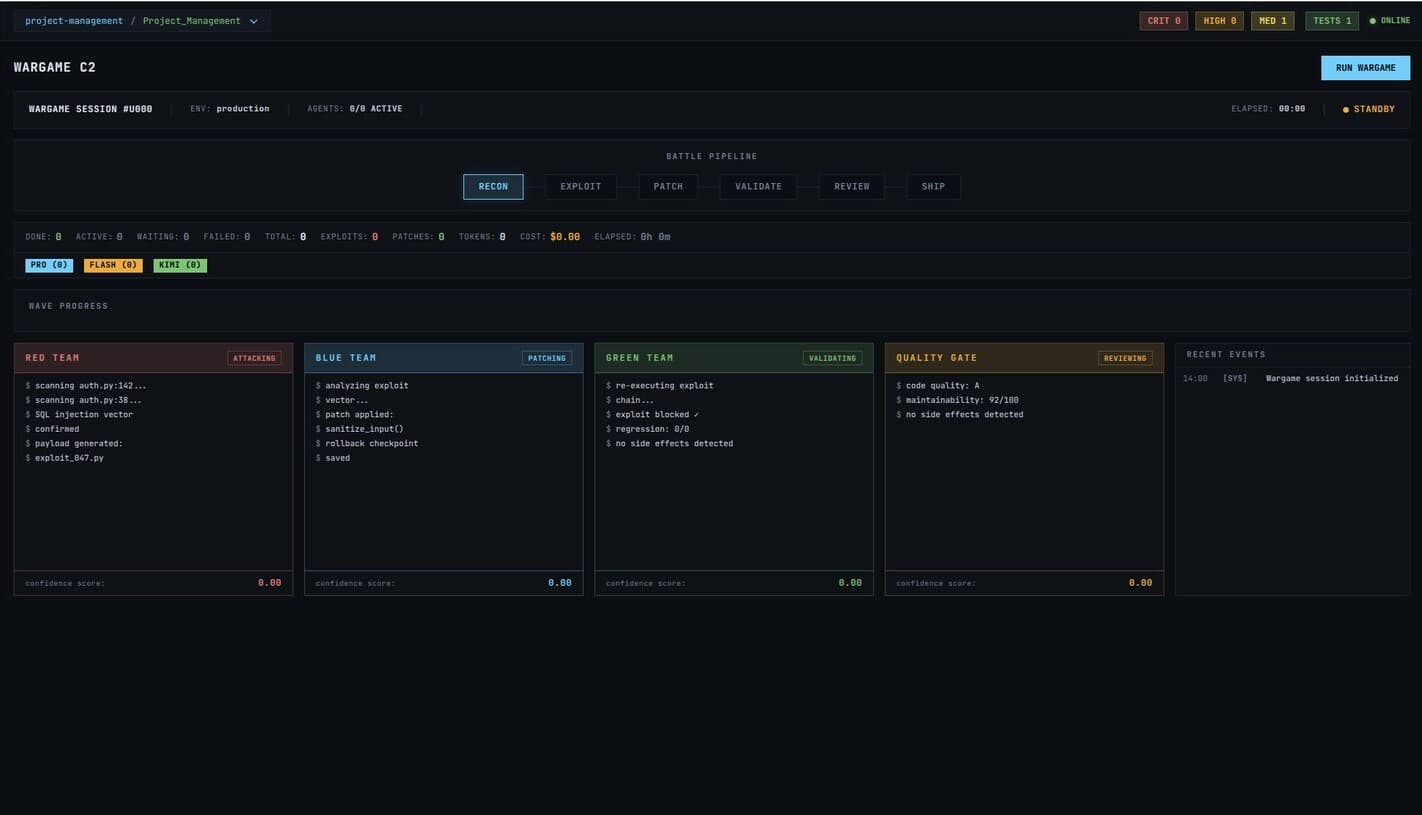
On request, the platform searches a codebase for an exploitable weakness, proposes the patch and checks that the patch closes it. Each item comes back as verified, partly fixed, still open or a false alarm, and an engineer decides what lands.
- One sweep covers several perspectives, from business logic to compliance
- Patches arrive as proposals; nothing is written to the repository
- Agents run under restrictions that block destructive operations
What changes in practice
Engineers review findings with supporting evidence and suggested fixes.
One queue
What a review produces
Findings from every agent arrive as one ordered list, worked from the top.
Evidence attached
What accompanies a finding
Engineers see the evidence and the review status attached to every finding before they act on it.
An engineer decides
How changes land
Fixes and patches arrive as proposals with a preview. Nothing is written to a repository without an engineer accepting it.
Talk to us about code review at your company
Tell us how code is reviewed today and where it stalls. We will tell you what is worth automating and what is not.
Discuss your project